Education
Education and Workforce Development
Education and workforce development are integral parts of eLab’s mission. Our goal is to prepare students and working professionals to design, evaluate, and optimize next-generation computing systems. eLab research focuses on energy-efficient embedded systems, heterogeneous architectures, chiplet-based integration, hardware/software co-design, and power/thermal-aware design methodologies.
Our educational activities are tightly coupled with the group’s research projects and open-source toolflows. Rather than teaching isolated concepts, we aim to expose students to realistic end-to-end design workflows that span applications, architectures, interconnects, power delivery, thermal constraints, runtime systems, and design automation. These activities help translate research outcomes into classroom modules, course projects, open-source artifacts, capstone experiences, and industry-relevant training opportunities.
Curriculum Development
eLab research contributed to the development and modernization of undergraduate and graduate courses in VLSI design, embedded computing systems, and heterogeneous system design. These courses introduce students to cross-layer design and optimization concepts, including application-driven architecture design, domain-specific SoCs, chiplet-based systems, network-on-interposer architectures, power and thermal modeling, and runtime resource management.
Teaching materials are regularly updated to incorporate recent research outcomes. When appropriate, course projects are structured around open-source tools, benchmark suites, starter code, reference implementations, and evaluation scripts, enabling students to gain practical experience with realistic system design challenges. Project-based learning activities are included to encourage students to optimize for performance, energy efficiency, thermal behavior, and system-level tradeoffs.
Making Chip Design More Accessible
One of our main goals is to make chip design easier and more productive for both undergraduate and graduate students. Many students in digital VLSI and computer architecture courses find it challenging to learn hardware description languages, understand the chip design process, and use commercial EDA tools.
To address this challenge, eLab integrates modern educational EDA tools and research-driven design projects into VLSI coursework. In collaboration with Redwood EDA, we will develop course projects that use tools such as Makerchip and SandPiper to help students learn Verilog-based digital design and transaction-level design concepts. These projects are designed to connect classroom learning with current research topics, including workload-driven design, network-on-interposer architectures, and power-delivery-aware optimization.
Graduate research assistants working on these projects help develop and test the course materials before they are used in class. They also serve as teaching assistants, guiding students as they use the tools, complete design assignments, and relate course ideas to real research problems.
We regularly update our teaching materials to include the latest research findings. When it makes sense, course projects use open-source tools, benchmark suites, starter code, reference designs, and evaluation scripts. This gives students hands-on experience with real system design challenges. We also include project-based activities that encourage students to improve performance, energy efficiency, thermal behavior, and system-level tradeoffs.
Industry Engagement, Internships, and Capstone Projects
eLab works with industry collaborators to strengthen the connection between university training and semiconductor workforce needs. Industry-sponsored capstone projects and internships provide students with opportunities to apply classroom knowledge to practical design challenges across design automation, computer architecture, chiplet integration, packaging, power delivery, thermal analysis, embedded systems, and runtime optimization.
Capstone projects follow a structured model in which student teams work with mentors from problem definition and design specification through implementation, evaluation, and final presentation. Internship and capstone outcomes are shared with peer groups, faculty, and participating mentors, creating a feedback loop between research, curriculum development, and workforce training.
Courses Developed/Revised and Taught
ECE 555: Digital Systems and Components
ECE 555 is the primary undergraduate course at UW–Madison that introduces students to VLSI circuit design and the computer-aided design of integrated circuits. The course covers fundamental digital design concepts, CMOS logic, layout, timing, power, and CAD-based design flows.
To modernize the undergraduate VLSI curriculum, we transitioned the CAD assignments and course project from an educational 45 nm planar technology to a 7 nm FinFET-based process technology. This update required substantial preparation, including installing new tools, integrating with existing CAD infrastructure, validating the updated design flow, and coordinating closely with engineering support staff.
We also developed new tutorials, CAD assignments, video materials, and course projects tailored to the 7 nm technology. These updates give students exposure to a more modern design flow and better prepare them for careers in the semiconductor industry.
ECE 755: VLSI Systems
ECE 755 is a graduate-level VLSI systems course that builds on the foundations of digital integrated circuit design and introduces advanced topics in system-level VLSI design. The course emphasizes design methodology, CAD flows, performance and power tradeoffs, and implementation challenges in modern integrated circuits.
We propagated the transition to 7 nm FinFET technology into ECE 755 and significantly revamped the semester-long course project. The updated project allows graduate students to gain deeper hands-on experience with modern process technology, advanced CAD tools, and system-level design optimization.
ECE 751: Embedded Computing Systems
ECE 751 covers the design and optimization of embedded computing systems, with emphasis on hardware/software co-design and energy-efficient system design. The course has been updated to include research-driven topics such as domain-specific SoCs, communication-centric multicore architecture design, power and thermal modeling, dynamic resource management, and chiplet-based architectures. These additions expose students to emerging challenges in embedded and heterogeneous computing systems and connect course concepts with ongoing research in eLab.
ECE 352: Digital System Fundamentals
Logic components, Boolean algebra, combinational logic analysis and synthesis, synchronous and asynchronous sequential logic analysis and design, digital subsystems, computer organization and design.
Past Activities: High School Engineering Research Program
High school students gain research experience at research laboratories during summers.
Jena Sania (12th grader) and Bhavya Sarma (11th graders) worked at eLab from June to August. They performed research on employing flexible hybrid electronics and internet-of-things for innovating new assistive technologies. They used brain-machine interface headsets, designed a virtual room environment and started learning Matlab. They plan to continue to with them throughout the school year, and study science and engineering at college. Check their video out to see what they accomplished and plan to do.
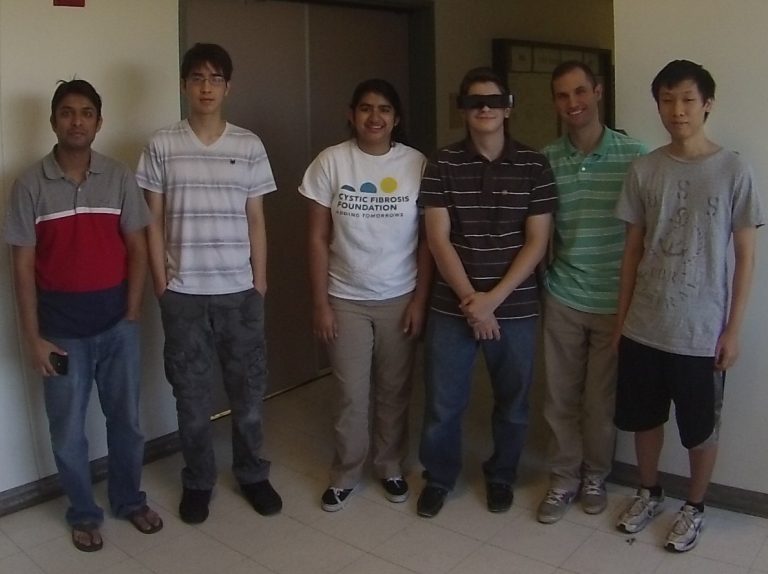
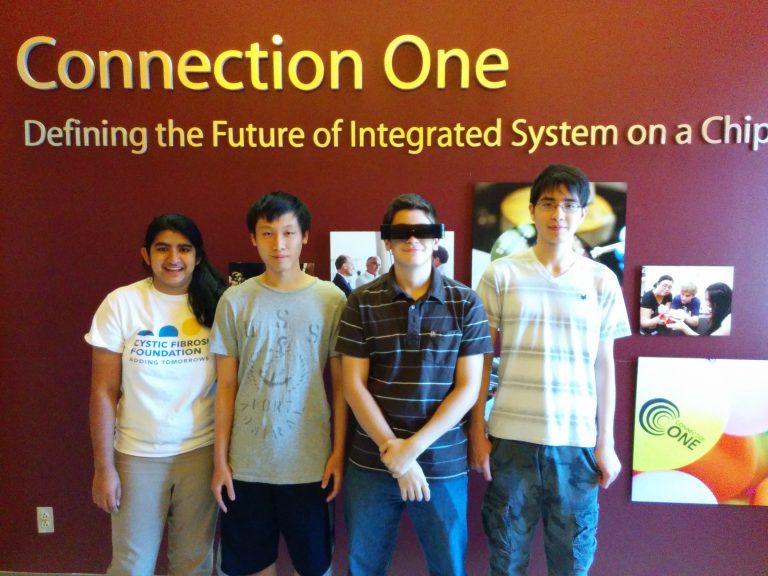
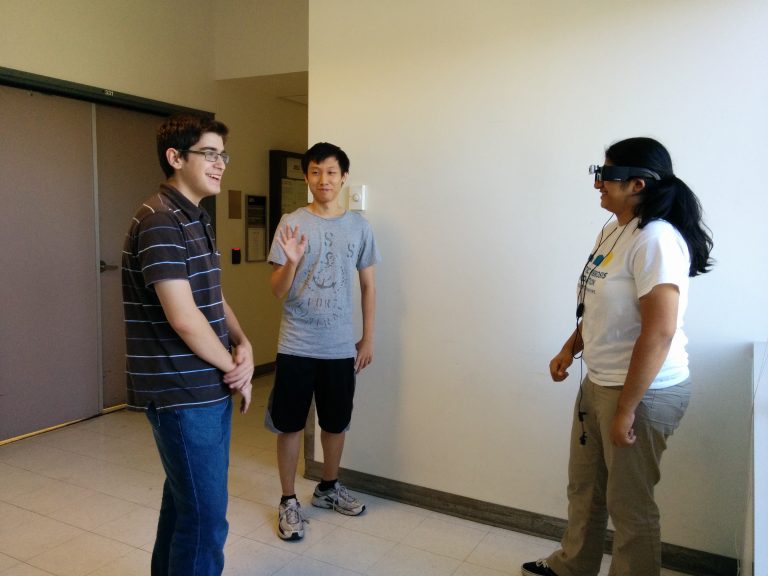
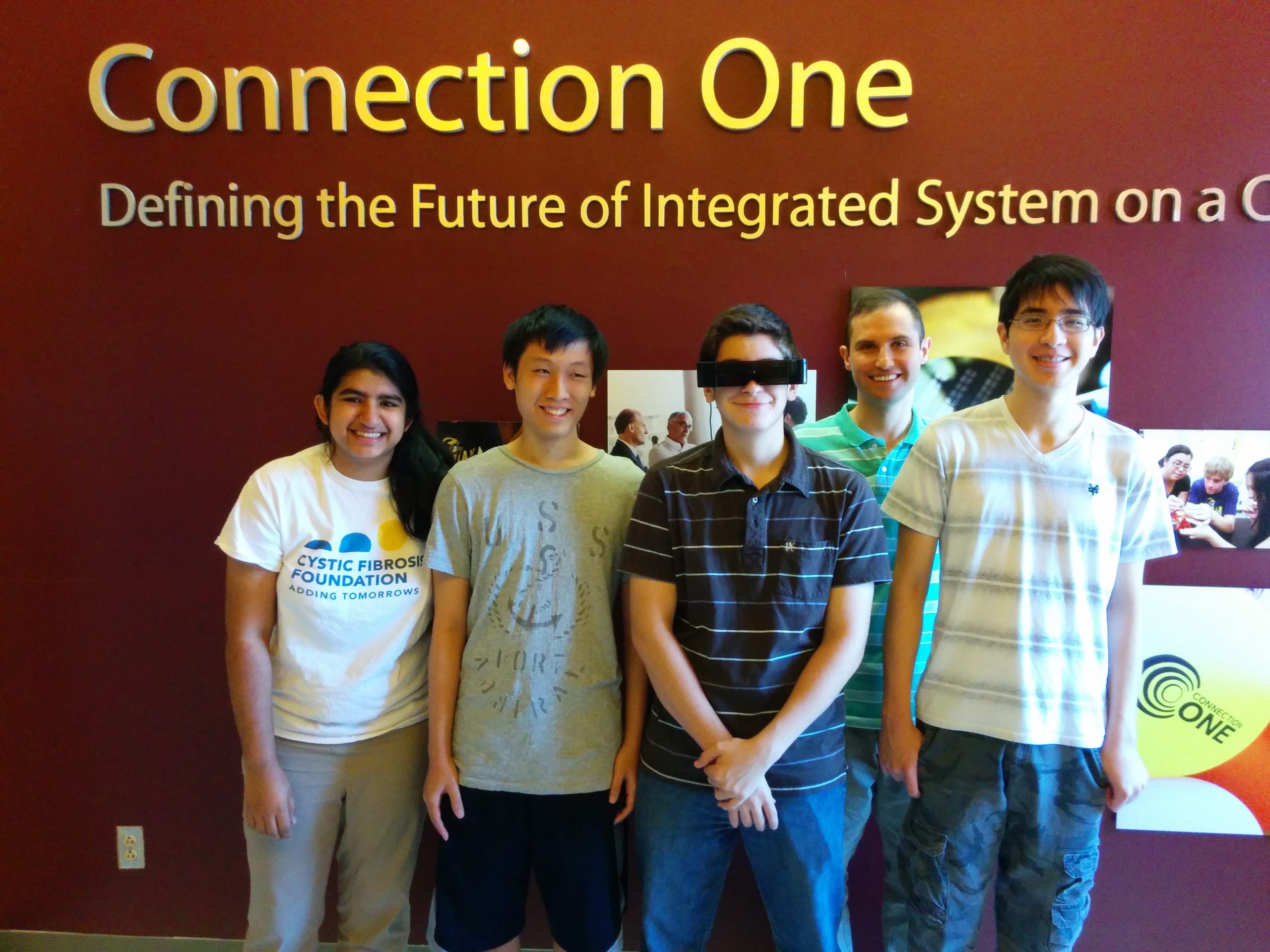
Shreya, Muhammed and Senan participated in personalized computing research at eLab during Summer 2014. More specifically, they conducted research using smart glasses to develop assistive technologies for people suffering from Alzheimer’s diseases. View the poster that summarizes their hard work and accomplishments.